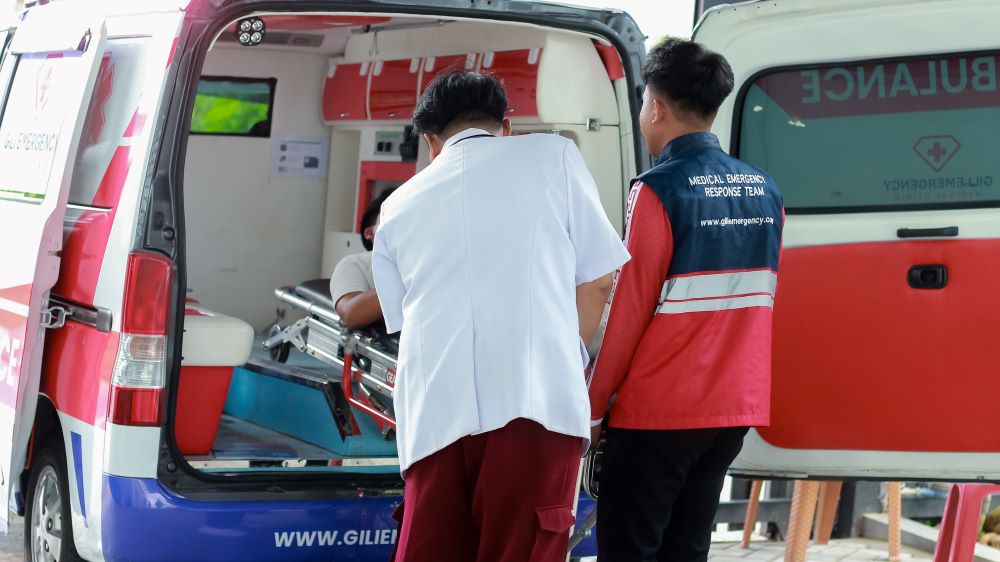
If you’ve ever dreamed of escaping to the Gili Islands—those tiny tropical circles of white sand, turquoise water, and chill vibes—you probably picture sunsets, snorkeling with turtles, and beach cafés. But here’s the thing most people never think about until it’s too late: ambulance Gili and how emergency response really works on these car-free islands.
I know, it’s not the sexiest topic… but trust me, when you’re on a remote island where the loudest sound is usually a rooster or a reggae playlist, you want to know exactly what happens if something goes wrong. And after spending time on Gili Trawangan, Gili Air, and Gili Meno—plus talking with locals and health workers—I realized travelers deserve a clear, friendly, human explanation about what to expect.
So grab a coconut, relax, and let’s dive into the 7 essential things you should know… before you need them.
1. What “Ambulance Gili” Really Means on a Car-Free Island
Here’s the first thing people get wrong: there are no motorized ambulances within the Gili Islands themselves. No cars. No vans. No sirens echoing through narrow sandy roads.
So what replaces them?
A combination of bikes, electric carts, horse-drawn cidomo, and medical boats. Think of it like a hybrid system adapted to an island that prioritizes peace and simplicity.
The moment you step on the island, you can feel how quiet it is—the soft crunch of sand under bicycle wheels, the gentle clop of horses. It’s beautiful… until you’re the one who needs urgent help. This is where the unique logistics of the ambulance Gili system come in.
And honestly? It works surprisingly smoothly once you understand how it’s structured.
2. Medical Response Teams Act Fast (Even Without Engines)
It might seem slow or chaotic from the outside, but emergency teams here are incredibly resourceful.
On my last visit to Gili Trawangan, I watched how a clinic team responded when a surfer sprained his ankle near the pier. Within minutes, two staff arrived on an electric cart equipped with first-aid gear. No frantic energy, no shouting—just a calm, well-practiced rhythm.
You can almost see their flow:
the quick scan of symptoms…
the practiced movements…
the confident “you’re okay; we’ve got you.”
The point is: yes, things look different, but help moves fast.
3. Boats Are the Real “Ambulance Gili” for Major Emergencies
Here’s the heart of the system:
When a case is too serious for the small island clinics—like fractures, dehydration, allergic reactions, or anything requiring hospital care—patients are transferred by medical speedboat to Lombok.
Imagine a floating ambulance: emergency staff, supplies, oxygen, monitoring equipment, and a boat captain who probably knows those waters better than he knows his own living room.
The ride to Lombok is usually around 10–15 minutes depending on the island and sea conditions. Feels fast… sometimes too fast when the waves pick up. I remember gripping the rail once during choppy seas, thinking, Wow, nature really calls the shots here. But it’s still the safest route.
4. What Happens on Each Island (Because They’re All Different)
Not all three Gili Islands operate identically. Each one has its own vibe, and its ambulance-style system reflects that.
Gili Trawangan
The busiest, most urban of the three.
More clinics, more equipment, more staff.
Electric medical carts are common here.
Gili Air
Calmer, quieter, but still well-equipped.
Medical response relies on bikes and some electric vehicles.
Good coordination with Lombok for transfers.
Gili Meno
The most peaceful and least crowded.
Limited onsite resources, so boat transfer plays a major role.
The island feels like a gentle whisper—beautiful, but definitely remote.
Knowing these differences helps you set realistic expectations.
5. When You Should Actually Call the Emergency Line
One of the funny things I learned? Most travelers hesitate to call for help because they think their issue is “too small.” But island medics prefer you call early rather than wait.
Typical reasons people use ambulance Gili:
-
Motorbike injuries from Lombok day trips
-
Heat exhaustion or dehydration
-
Diving or snorkeling accidents
-
Allergic reactions (seafood… bee stings… coral cuts)
-
Intense stomach issues (yes, Bali belly can reach the Gilis too)
If your senses tell you something feels “off”—a dizzy wave, a sharp pain, that weird numbing feeling in your fingers—don’t brush it off. That’s your body whispering a warning.
6. The Real Cost: Don’t Get Shocked Later
Money isn’t romantic, but it matters. Here’s the truth you’ll want to know before you go:
-
Clinic visits start from affordable to moderate pricing.
-
Boat ambulance transfers cost significantly more.
-
Travel insurance? Total lifesaver.
I once met a traveler from Australia who needed a late-night boat transfer after a coral injury got infected. She told me, “That 15-minute boat ride was the most expensive boat ride of my life.” Thankfully, her insurance covered almost all of it.
Presupposition time: You’re already thinking about checking your insurance coverage now, aren’t you? (Good.)
7. How to Stay Safe So You Never Need an Ambulance on Gili
Let’s wrap with something empowering:
You can dramatically reduce your risk with simple habits.
Here are things locals always remind travelers:
-
Stay hydrated—seriously, the sun sneaks up on you.
-
Wear reef-safe sunscreen and water shoes.
-
Be careful with bikes at night (the sand patches are sneaky!).
-
Don’t push your limits while snorkeling or diving.
-
Respect the ocean currents—they’re stronger than they look.
-
Watch your step around coral… trust me, it bites.
And here’s a micro-story:
One evening in Gili Air, I watched a couple biking back from sunset. The guy turned his head for one second—just one—and boom, the front tire hit a soft patch of sand. He flew over the handlebars like a slow-motion movie stunt. Nothing major happened, thankfully… but it reminded me how tiny moments can turn into big problems.
At the end of the day, the ambulance Gili system is all about island-adapted efficiency. It may not look like the glossy ambulances you see in big cities, but it works—quietly, quickly, and with a whole lot of heart.
The Gilis are magical, and with a little awareness and preparation, you’ll enjoy them fully without worry. And if anything unexpected happens? You’ll know exactly what to do and what to expect.
Stay safe, stay curious… and enjoy the islands.